
Key point
Trading software should be tested in demo before it is trusted on a live account. This is especially important when the software can send, close, protect, or modify MT5 positions through a faster manual workflow.
The goal is not to prove that the software creates profitable trades. The goal is to prove that installation, command behavior, symbol handling, and user expectations match.
Separate software testing from strategy testing
A demo test for trading software is different from testing a trading strategy. The software test asks whether the product behaves as expected inside MT5. It does not ask whether the user's market decision was good.
This separation matters because a user can have a losing trade while the software still worked correctly, or a winning trade while the workflow was still unsafe.
A clean test focuses on product behavior first.
Verify the install before testing commands
The first live-use checkpoint is installation. The user should confirm the correct MT5 terminal, product version, permissions, visible panel or interface, and any setup steps required by the documentation.
If the software is installed in the wrong terminal or an old MT5 instance, command results may confuse the user even when the product files are present.
Installation notes should include the folder or terminal name so the user can rebuild the setup later.
Confirm broker symbol naming
Broker symbol naming can create mistakes in MT5 workflows. A user may expect XAUUSD, EURUSD, or another common symbol while the broker displays a suffix, prefix, or alternate contract name.
The demo test should use the exact broker symbol that appears in the platform. This is not a cosmetic detail when commands are scoped by current symbol or when the user compares setup notes.
Recording the broker symbol makes the workflow more supportable.
Check account mode and permissions
The user should verify whether the account is demo, live, or another account type before testing any command. They should also check whether trading is permitted, whether automated trading settings affect the tool, and whether MT5 shows any permission or connection problem.
A product can appear broken when the platform is disconnected or when permissions block the action.
Testing begins only after the platform state is known.
Use tiny controlled test scenarios
A sensible demo test uses tiny controlled scenarios. The user can open a small demo position, trigger one command, and then inspect the position list and history.
The user should repeat the test with different position states when the command depends on profit, loss, current symbol, or account-wide behavior.
A controlled scenario is better than testing during a busy chart moment because it removes unnecessary noise.
Test close and protection commands with care
Close and protection commands deserve extra testing because they can affect open exposure. The user should test close-all, close-profit, breakeven, trailing, or similar commands only after understanding what each command is intended to change.
The result should be checked in the MT5 position list, not assumed from the chart. If the command changes a stop or closes a position, the user should write down what changed.
A command that cannot be predicted should not be moved into faster access.
Test physical devices separately
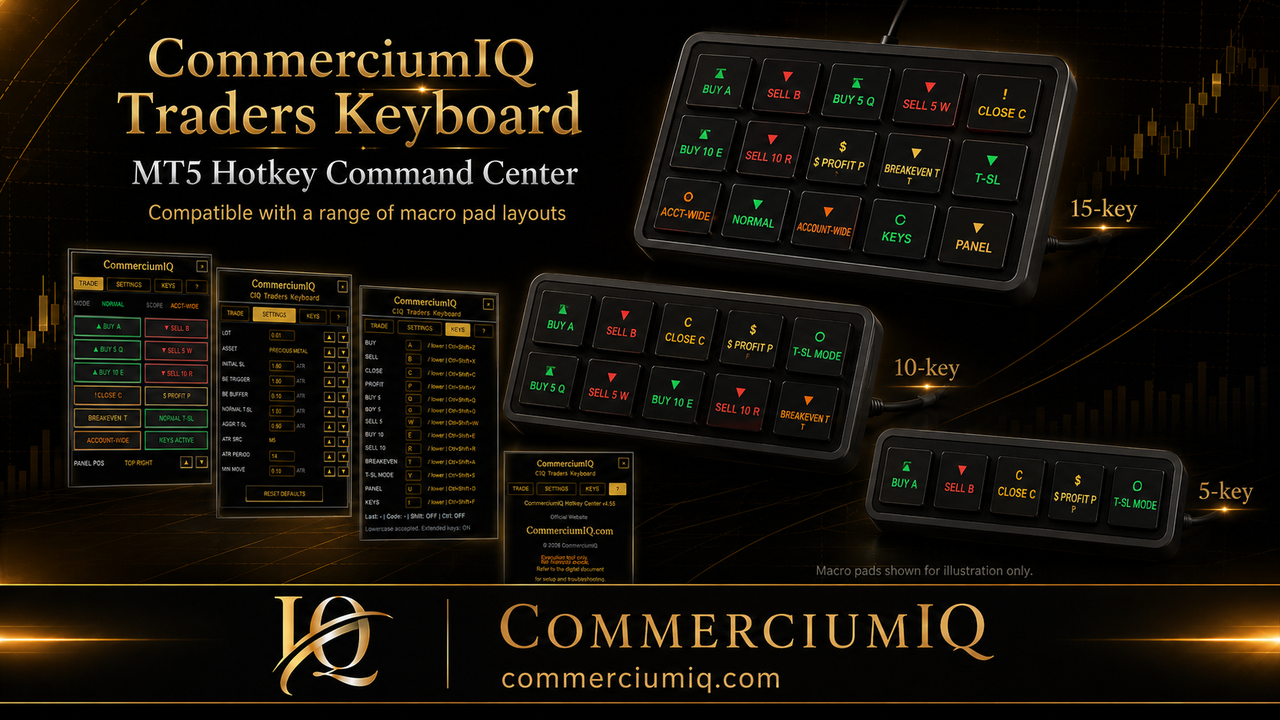
If the user connects a macro pad, keyboard, Stream Deck-style device, or laptop shortcut, the device should be tested after the software command is understood. This prevents the user from blaming the product when the physical mapping is the real issue.
The test should identify the device profile, key label, software command, and MT5 result.
Device testing is complete only when the physical input and the software command produce the same documented outcome.
Build a support-ready record
A support-ready record includes product version, MT5 build if known, broker name, broker symbol, account type, command name, physical key if used, expected result, and actual result.
This record saves time if the user asks for help. It also helps the user notice when a future update changes the environment.
The record should be stored with setup notes rather than recreated from memory.
Know what does not prove readiness
A single successful click does not prove the whole workflow. A command may pass once but fail under a different symbol, account, position count, or device profile.
A successful trade also does not prove the software is safe to use. The market outcome and the software behavior are separate.
Readiness comes from repeated, documented command tests under the scenarios the user expects to encounter.
When to delay live use
Live use should be delayed when the user cannot explain command scope, cannot identify the active account, sees a symbol mismatch, has not tested a physical device, or notices any unexpected result in demo.
Delaying live use is a disciplined decision. It protects the user from turning a setup issue into a financial mistake.
The product should encourage that pause rather than pushing the buyer toward speed.
Final pre-live rule
A demo-tested software workflow should have clear installation notes, verified symbols, known permissions, tested commands, and a written support record.
If those pieces exist, the user has a stronger foundation for deciding how to use the product.
If those pieces are missing, the next step is not live use. The next step is more controlled demo testing.
Create a pre-live signoff note
Before live use, the user should create a simple signoff note for the trading software setup. The note should say which MT5 terminal was tested, which broker symbol was used, which commands passed, and which commands were left out of fast access.
This note is not a legal document or a performance record. It is a practical setup record that prevents the user from relying on memory after a break, update, or device change.
A pre-live signoff also gives support a clearer starting point if the user later needs help.
Avoid testing during emotional market conditions
Software testing should not be done while the user feels rushed by a live market move. A busy chart can make the user mix strategy emotions with setup verification.
The better method is to use calm demo conditions first, then retest only the necessary commands in more realistic scenarios after the basic behavior is known.
That sequence keeps the purpose clear: first verify the software workflow, then separately evaluate whether the trading routine itself is ready.
Retest the exact commands that affect exposure
Not every command needs the same level of retesting. Commands that only open a help panel or mapping view can be checked quickly, while commands that open, close, or protect positions deserve a stronger retest.
The user should prioritize any command that changes position size, stop placement, trade status, or active exposure.
This makes the pre-live process efficient without treating high-impact commands casually.