
Key point
MT5 execution basics come before hotkeys, macro pads, or trading keyboard software. A faster command workflow should support actions the trader already understands, not replace basic platform knowledge.
The safest sequence is platform literacy first, demo testing second, and faster workflow only after the expected MT5 result is clear.
What execution means in MT5
Execution refers to the process of sending and managing trade actions inside the platform. That can include opening a market order, modifying a stop, moving to breakeven, closing a position, or reviewing order history.
For a manual trader, execution is not only the click that opens a trade. It includes the steps before and after the command: checking the account, symbol, lot size, order type, position list, and result.
This is why execution workflow should be treated as an operating process rather than a single button press.
Market orders and pending orders
A market order attempts to enter at the available market price. A pending order waits for a condition or price level before it becomes active, depending on how it is configured.
The trader should understand which order type is being used before any shortcut or command layer is introduced. A key that sends the wrong type of action can create confusion immediately.
A beginner should practice these actions slowly inside MT5 before mapping them to faster input.
The position list is the source of truth
After an order or management command is sent, the position list and account history become the source of truth. The chart may show useful visual context, but the position list confirms what the platform actually holds.
A good MT5 workflow includes a post-command review. The trader checks symbol, direction, volume, entry, stop, take profit, and whether any position remained open unexpectedly.
This habit reduces the risk of repeating a command because the user did not notice the first result.
Command scope basics
Command scope means the range of positions or symbols affected by an action. A current-symbol command is different from an account-wide command, and a close-profit command is different from a close-all action.
The trader should be able to explain the scope before pressing any mapped command. If the scope is unclear, the action should be performed manually and slowly until the user understands it.
Scope clarity is one of the most important safety topics for execution software.
Close behavior needs special care
Close actions can feel protective because they reduce exposure, but they can still create errors. Closing the wrong symbol, closing only part of the intended exposure, or closing a wider group than expected can all cause confusion.
A close command should be tested with one position, multiple positions, profitable positions, losing positions, and different symbols in demo.
The user should know exactly what closes and what stays open.
Breakeven and stop movement
Breakeven and stop-management commands affect risk after a position is open. They should not be used casually because the new stop location changes the trade's risk and potential outcome.
A trader should understand whether the command moves a stop, adds a buffer, or depends on the current position state. The expected result should be visible in MT5 after the command is sent.
If the result cannot be verified, the command is not ready for serious use.
Keyboard shortcuts versus workflow software
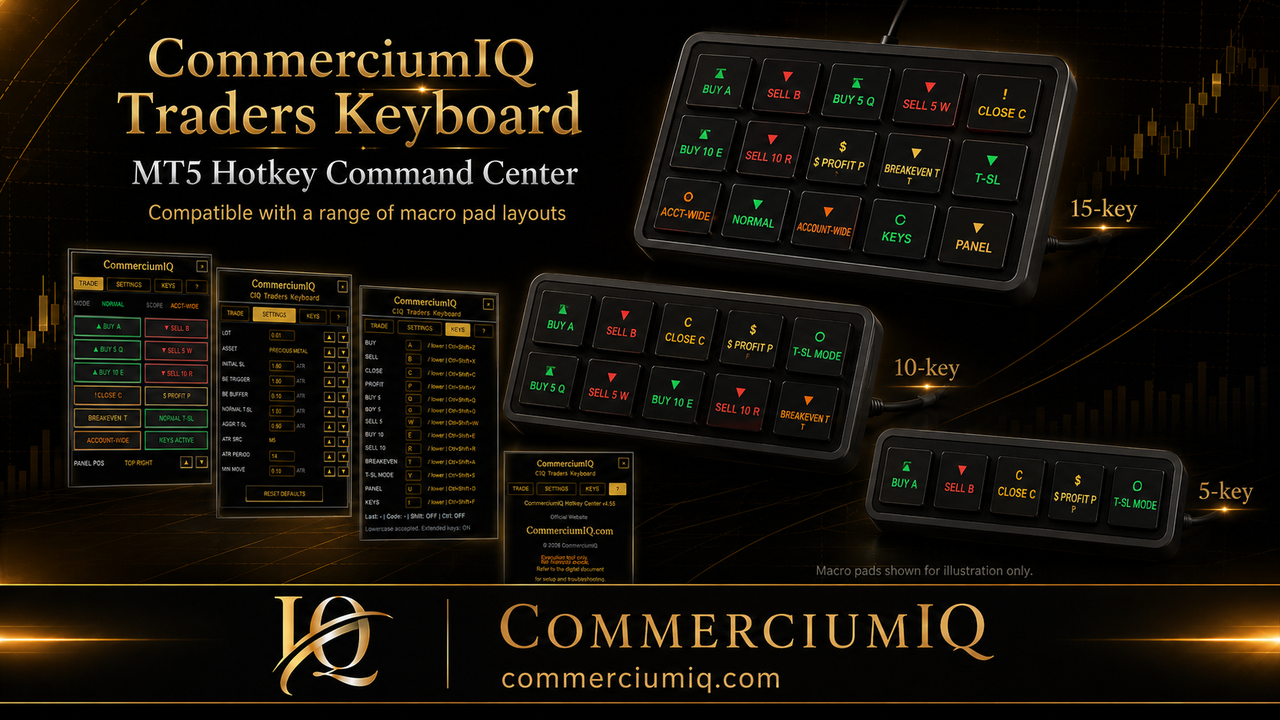
A simple keyboard shortcut is only an input. Workflow software adds structure by grouping commands, providing labels, and encouraging a repeatable setup process.
That structure matters because execution mistakes often come from unclear workflow rather than the absence of speed.
The product should be described as manual command support, not as a substitute for execution knowledge.
Why demo testing belongs in execution basics
Demo testing is not a marketing disclaimer. It is the practical way to confirm that the user's exact environment behaves as expected.
A demo checklist should include account, symbol, lot size, command type, command scope, expected result, actual result, and post-command review.
This checklist turns platform learning into evidence.
Common beginner execution mistakes
Common mistakes include trading the wrong symbol, using the wrong lot size, forgetting that a different account is active, confusing current-symbol and account-wide behavior, and failing to review the position list.
Faster commands can make these mistakes happen faster if the workflow is not clear. The purpose of a command center is to reduce friction after the user understands the action.
A safer workflow does not remove responsibility. It makes the responsibility easier to see.
Final execution-basics rule
Before using any mapped workflow, the trader should be able to answer: what account is active, what symbol is active, what command is being sent, what scope is affected, and where the result will be verified.
If the answer is unclear, the correct action is to pause and use MT5 manually until the workflow is understood.
That rule keeps execution basics connected to safe product onboarding.
Build execution knowledge before mapping keys
A trader should be able to place, modify, and close a position manually before mapping that action to a faster key. This is not about making the workflow slower; it is about understanding the result before adding speed.
If the user cannot perform the action inside MT5 manually, a shortcut or command center may hide the learning gap until a mistake happens.
Users should practice the platform manually before configuring fast-access controls.
Review the account before the command
The account should be checked before important actions because demo, live-style, and evaluation accounts can look similar during a busy session. The trader should know which account is active before pressing any mapped command.
This is especially important when the same MT5 terminal or product workflow is used across multiple accounts.
A simple account check can prevent a workflow error that no button design can fully remove.
Review the result after the command
Execution basics include post-command review. After pressing a key or using a platform control, the trader should confirm what actually changed in MT5.
The review should include open positions, history, stop levels, take-profit levels, and any remaining exposure. A chart alone may not show enough detail.
This post-command review turns the workflow into a closed loop rather than a blind input.
Connect order basics to close-scope basics
Opening a position is only one part of execution. The trader also needs to understand what happens when positions are closed, partially closed, moved to breakeven, or managed through a current-symbol command.
Close-scope knowledge prevents the user from assuming that every close action behaves the same way.
These basics prepare readers to understand close-all, close-profit, partial-close, and account-wide behavior.
Final execution-readiness question
The final question is whether the user can explain the intended action before pressing the command and verify the result after it happens.
If the answer is yes, faster workflow support can be tested responsibly. If the answer is no, the user should stay with slower MT5 controls until the action is understood.
That standard supports platform literacy rather than presenting the product as a shortcut around it.