
Key point
MT5 keyboard shortcuts can reduce repeated actions, but shortcuts alone do not create a safe workflow. The trader still needs clear labels, command scope, active-window awareness, and a post-command review habit.
A shortcut becomes useful only when the user can predict the result before pressing it.
What a shortcut can solve
A shortcut can reduce clicks, make repeated actions easier to access, and support a more consistent routine. That can be useful for manual traders who frequently repeat the same platform actions.
The benefit is operational. It does not mean the trade idea is better or that the user has reduced market risk.
A shortcut should be judged by whether it makes the manual process clearer, not only faster.
What a shortcut cannot solve
A shortcut cannot choose the correct trade, define risk, confirm the account, or decide whether the market is suitable. It only sends or supports an action that the user has chosen.
This is why shortcuts can be dangerous when a trader treats speed as a substitute for process. A poor decision can be sent quickly too.
The workflow around the shortcut matters more than the shortcut itself.
Active-window awareness
Keyboard input depends on focus. If MT5 is not the active window, or if another dialog is open, the shortcut may not behave as expected.
A safe routine includes checking the active chart and platform state before using a command. The user should not press keys from habit while another window is selected.
This applies to normal keyboards and macro pads because both are sending inputs through the computer.
Labels and memory risk
A keyboard shortcut can be hard to remember if the label exists only in the user's head. Physical labels, on-screen command names, and a written mapping sheet reduce memory risk.
The label should describe the actual command, not an approximate idea. A vague label can cause confusion when the user is under pressure.
The more important the command, the clearer the label needs to be.
Command scope and shortcuts
A shortcut that closes a position, closes profitable positions, or affects the current symbol must be understood by scope. The user should know exactly what positions can be affected.
The same key can be safe in one context and dangerous in another if the trader does not check symbol or account state.
Shortcut education should always include scope education.
Why workflow software can help
Workflow software can make shortcuts more visible by grouping commands, adding labels, and creating a more structured process. That does not remove user responsibility, but it can reduce confusion.
A good command center helps the trader understand which actions are available and what should be tested.
The software should be described as manual support rather than automation.
Using macro pads with shortcuts
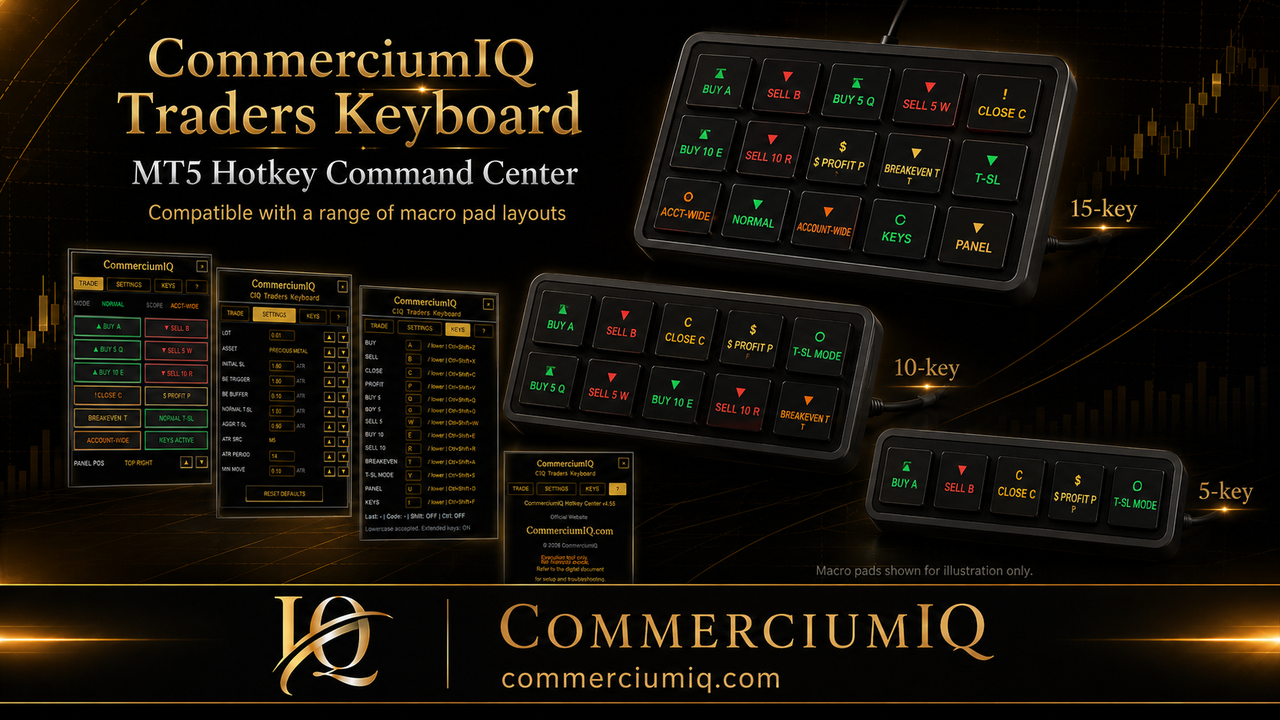
A macro pad can make shortcuts easier to access by giving them physical buttons. The pad still needs labels, spacing, and demo testing.
A macro pad can make a good shortcut workflow easier to use, but it can also make a confusing workflow easier to trigger by mistake.
The device should come after the command map is understood.
Demo-testing shortcut behavior
The user should test each shortcut in demo with the exact MT5 terminal, Windows setup, account, symbol, and input device they plan to use.
Testing should include what happens before the command, what happens after the command, and how the result is verified in MT5.
A shortcut that has not been tested should not be treated as ready.
When to keep using manual controls
Manual controls may be better when the trader is still learning the platform, when the command scope is unclear, or when the action is rare enough that speed is unnecessary.
Not every action deserves a shortcut. Some actions are safer when they require slower review.
A mature workflow chooses which actions to speed up and which actions to keep deliberate.
Final shortcut rule
A keyboard shortcut is ready when the trader can name the command, explain the scope, confirm the active environment, press the key once, and verify the result.
If any part of that sequence is unclear, the shortcut should stay in demo or be removed from the fast workflow.
That rule keeps shortcut use aligned with safer manual execution.
Create a shortcut permission rule
A shortcut permission rule tells the user what must be true before a shortcut can be pressed. It can include active MT5 window, correct account, correct symbol, reviewed lot size, known command scope, and visible position list.
The rule should be short enough to remember and strict enough to stop careless inputs.
If the rule cannot be completed, the action should be performed slowly through normal MT5 controls.
Separate utility shortcuts from trade commands
Utility shortcuts such as showing a panel or opening a mapping view should be separated from commands that affect trades. This helps the user avoid treating every key as equally important.
Trade-affecting commands require stronger labels, more deliberate placement, and more demo testing.
A layout is safer when harmless actions and high-impact actions are visually and physically different.
Use shortcuts with a written map
A written shortcut map helps the user avoid relying only on memory. The map should list the command name, the physical key or combination, the expected MT5 result, and any scope limitation.
This map can be kept in the setup guide, printed beside a macro pad, or included in a support checklist.
A written map also makes it easier to rebuild the workflow after a device or computer change.
Retest after any shortcut change
A shortcut change is not cosmetic. Moving a command from one key to another changes muscle memory and can increase user error during the transition.
The user should retest the changed key in demo and avoid serious use until the new mapping feels predictable.
This is especially important for close, breakeven, and position-management commands.
Final shortcut-readiness check
A shortcut is ready when the user can name it, explain it, test it, and verify it. If the user only remembers the key but not the result, the shortcut is not ready.
This readiness check supports safer manual execution rather than shortcut hype.
The goal is not to create more keys. The goal is to create fewer surprises.
Keep shortcut expansion gradual
Shortcut expansion should happen gradually. A trader should not map every possible action at once simply because the software or device allows it.
A better process is to test one small group of shortcuts, document the result, then add another group only if it solves a real workflow problem.
Gradual expansion keeps the shortcut map understandable and makes troubleshooting easier if one command behaves unexpectedly.
Final shortcut documentation habit
A shortcut workflow should have a living record. That record can include the shortcut key, physical label, software command, expected MT5 result, test date, and notes from any issue found in demo.
This documentation does not need to be complex. It only needs to be clear enough that the user can rebuild or audit the workflow later.
The record helps keep shortcuts from becoming undocumented habits.