
Key point
Most MT5 order panel mistakes are ordinary field-checking mistakes. The trader may understand the trade idea but still send the wrong symbol, wrong volume, wrong order type, or an order without the intended protection.
A safer workflow makes the order panel a checklist instead of a box to rush through.
Account and symbol errors
The first mistake is using the wrong account. Many traders switch between demo, live, and evaluation accounts. If the account is wrong, every other field may be technically correct and still produce the wrong result.
The second mistake is using the wrong symbol. Broker suffixes, similar symbol names, and multiple open charts can confuse the execution context. The active chart should match the market the trader intended to trade.
Volume and order type confusion
Volume deserves a deliberate pause. A small difference in lot size can create a large difference in risk, especially on symbols with higher tick value or different contract settings.
Order type also matters. A market order, limit order, stop order, and stop-limit style workflow do not behave the same way. Beginners should avoid switching order types quickly until they understand what each field changes.
Protection fields are not decoration
Stop-loss and take-profit fields should not be treated as optional decoration. If the plan requires protection, the platform fields should reflect that plan before the order is sent or immediately after if the broker workflow requires a separate modification.
A fast workflow should never encourage the trader to skip the risk decision. The platform can carry out an order, but it cannot decide whether the risk is appropriate.
Build an order-panel routine
Use the same order every time: account, symbol, volume, direction, order type, protection, and final confirmation. The routine should be short enough to follow but clear enough to catch mistakes.
After sending an order in demo, check the position list and history. Confirm the actual entry, volume, symbol, and protection match the plan. This review step teaches the trader to trust evidence, not memory.
Mistaking the order panel for a trading plan
The MT5 order panel can make entry feel simple, but a simple panel is not the same as a complete trading plan. The trader still needs direction, invalidation, position size, stop logic, and a reason to be involved.
Beginner mistakes often come from focusing on the button rather than the decision. A buy or sell control is only the last part of the process.
A safer workflow teaches the trader to slow down before the order panel and verify the result after the command is sent.
Ignoring symbol and account context
Beginners may assume that the visible chart is always the chart being controlled, or that the current account is the intended account. With multiple MT5 accounts, broker suffixes, and chart tabs, that assumption can be dangerous.
The order panel workflow should always include account and symbol confirmation. This is especially important when moving between demo testing, personal accounts, and evaluation-style accounts.
If the trader cannot quickly identify the account and symbol, the order action should pause.
Using speed before understanding
Shortcut keys and command centers can be useful after the trader understands the platform behavior. They should not be used to skip learning basic MT5 order mechanics.
Before mapping fast controls, the beginner should understand market orders, pending orders, stop loss, take profit, position lists, order history, and close behavior.
The right sequence is learning first, demo testing second, and faster workflow only after the command results are predictable.
Not understanding order types
A beginner should understand the difference between market orders, pending orders, stop loss, take profit, and position closing before relying on a faster command layer. A shortcut should not become a substitute for platform literacy.
If the user does not know what type of order or management action is being sent, the safest workflow is to stop and learn the MT5 order panel first.
This connects the product to responsible setup habits instead of encouraging speed before understanding.
Forgetting to check the position list
After an order is sent, the position list becomes the source of truth. The trader should review symbol, size, direction, entry, stop, take profit, and any remaining exposure.
Beginners sometimes look only at the chart and assume the position state is correct. That can miss wrong volume, wrong symbol, duplicate entries, or a missing protection level.
A good workflow makes post-order review part of the routine, especially when hotkeys or macro pads are used.
Using one setup across all brokers without testing
Different brokers can use different symbol names, contract details, spreads, and execution behavior. A beginner should not assume that a workflow tested on one MT5 installation automatically works the same way everywhere.
Any broker, account, or terminal change should trigger a fresh demo test. The goal is to confirm the actual result in the actual environment.
This is especially important for users who install the product on more than one computer or move between demo and live-style accounts.
Treating mistakes as workflow feedback
If a beginner makes a platform mistake, the response should not be embarrassment or rushing to recover. The useful response is to identify what part of the workflow allowed the mistake to happen.
The fix may be a clearer label, fewer commands, a better setup checklist, or more demo practice before using faster controls.
This approach turns mistakes into product education and helps the user build a safer operating process.
Starting with too many controls
Another beginner mistake is trying to use every available command immediately. A new user may see buy, sell, breakeven, trailing, close-profit, panel toggle, and mapping options and assume all of them should be active from the first day.
A safer onboarding process starts with a smaller command set. The user can learn the MT5 order panel first, then test a small number of mapped commands in demo, then expand only after the behavior is predictable.
This prevents the tool from becoming a wall of buttons before the user understands the platform.
Not knowing what a successful order looks like
Beginners should know what a successful order or management action looks like in MT5. They should know where to see the open position, where to see history, and how to confirm whether a stop loss or take profit is attached.
Without that knowledge, a user may press a shortcut and not know whether it worked. That uncertainty can lead to repeated commands or rushed manual corrections.
A good workflow teaches the user to verify the result, not just press the button.
Build platform knowledge before adding faster controls
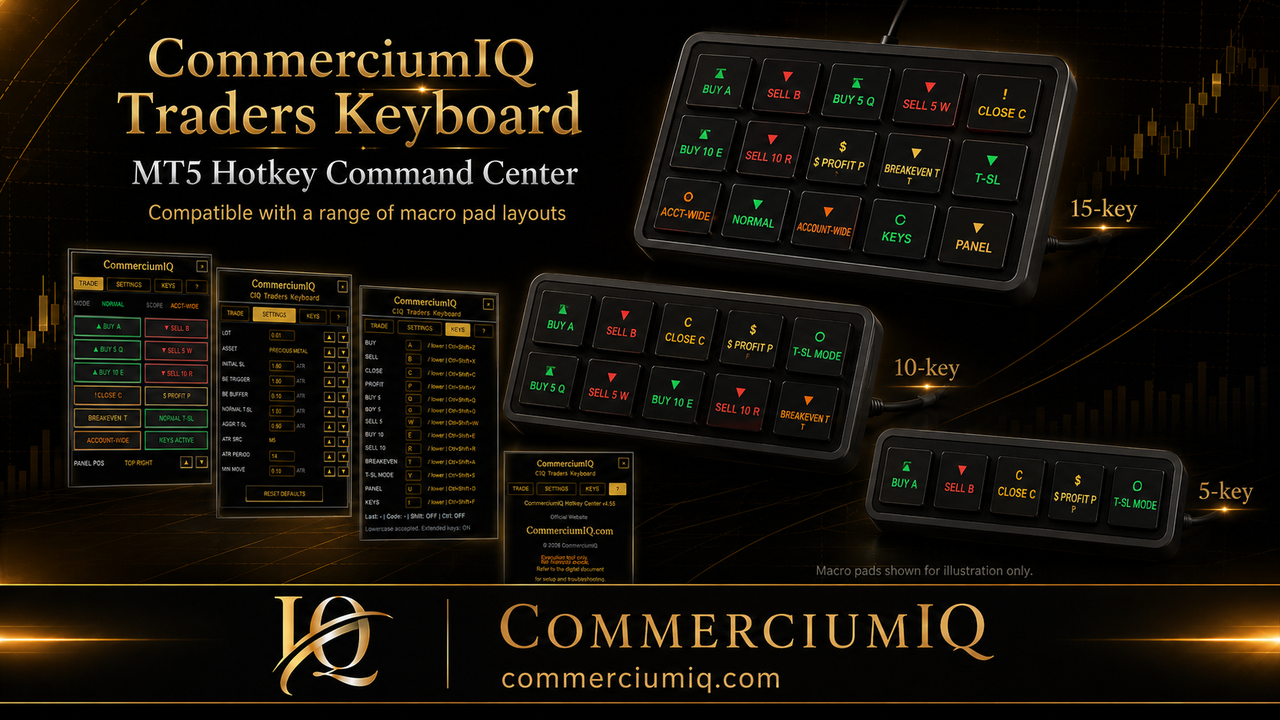
Beginners can use CIQ Traders Keyboard, but they should first understand the MT5 order panel, order types, position list, account history, stop loss, take profit, and close behavior.
A faster command layer is most useful when it organizes actions you already understand. It is not a substitute for learning the platform or a shortcut to better trading results.
Start with a small demo workflow, verify each result in MT5, and add commands only after the earlier steps are reliable.