
Key point
Current-symbol and account-wide commands can produce very different results. A command that feels safe on one chart may become risky if it can reach positions the user is not currently watching.
Before any command is mapped to a hotkey or macro pad, the user should know whether it is current-symbol scoped, account-wide scoped, or limited in another way.
What current-symbol means
Current-symbol scope means the action is intended to apply to the symbol associated with the active chart or the command's selected symbol context.
This can make a workflow easier to reason about, but it still requires the user to confirm that the active chart is the symbol they intended.
The user should also consider broker suffixes, prefixes, and duplicate-looking symbols.
What account-wide means
Account-wide scope means the command may evaluate or affect positions beyond the current chart. That can be useful for emergency or portfolio-level actions, but it carries more responsibility.
A trader should not treat account-wide behavior as a normal chart-level shortcut unless the workflow makes the reach unmistakable.
The label should say account-wide if that is what the command does.
Why this distinction matters for close commands
Close commands are where scope mistakes become most visible. A trader may intend to close only the chart symbol while a broader command reaches additional positions.
The opposite problem can also happen: the trader expects broader behavior but the command only affects the current symbol.
A demo test should prove both what changes and what remains untouched.
Why this distinction matters for protection commands
Breakeven and trailing-stop actions also depend on scope. The user should know whether a protection command applies to one position, one symbol, or a broader group of positions.
If the workflow can manage multiple positions, the user should test positions with different entry prices and stop locations.
Protection commands are still trade-management actions, so they deserve careful review.
Use labels that include scope
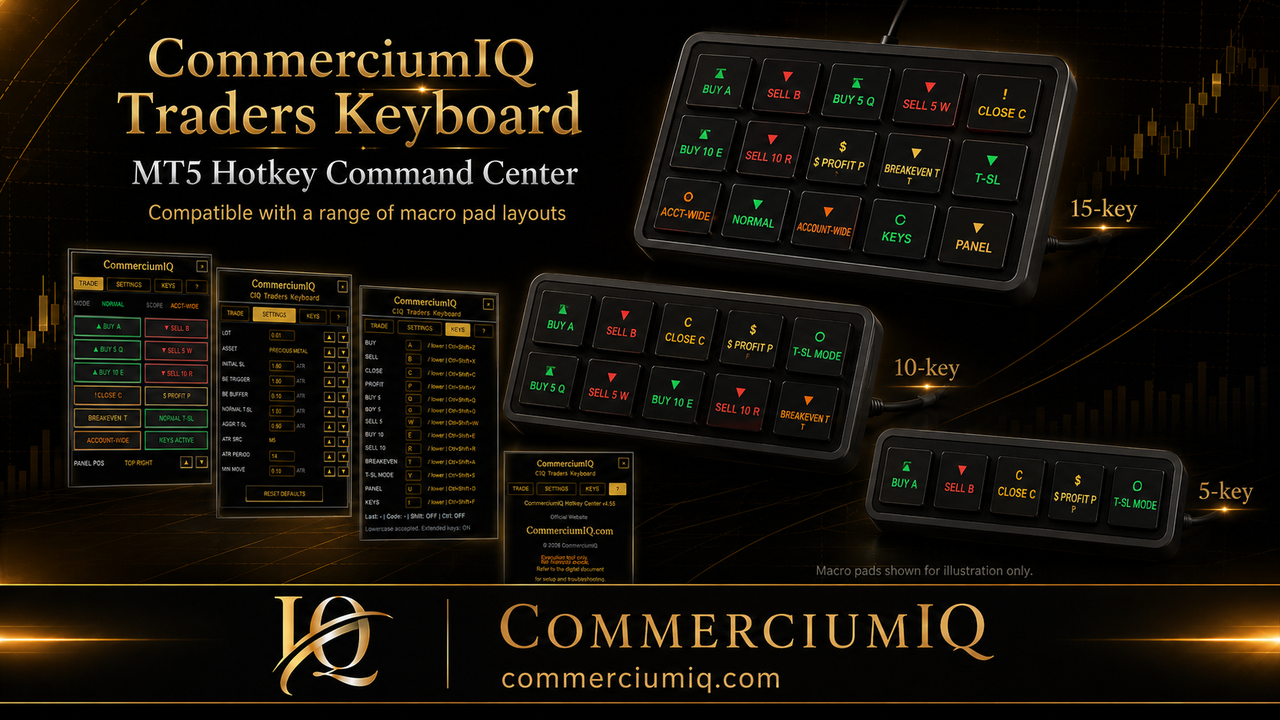
Labels should not force the user to remember hidden behavior. Close Current Symbol, BE Current Symbol, Trail Current Symbol, and Account-Wide Close are clearer than short names that omit scope.
The label should match the product documentation, not a personal nickname that support cannot interpret.
A consistent naming system helps the user rebuild the layout after updates.
Check the active chart before pressing a command
A current-symbol command depends on the active context. The user should verify the chart tab, symbol name, and position list before pressing the command.
This check matters most when several charts are open or when the user trades symbols with similar names.
The active chart check should be part of the pre-click routine.
Review the whole position list for account-wide commands
An account-wide command requires a full position-list review. The user should know what positions exist before a broader command is allowed to act.
This is not only about avoiding mistakes. It also helps the user confirm that the command behaved as expected after it runs.
A command should not have a wider reach than the user is prepared to review.
Physical layout rules for scope
Current-symbol commands and account-wide commands should not be placed beside each other without clear visual separation. Different key colors, spacing, or labels can reduce confusion.
On compact macro pads, it may be better to omit account-wide commands entirely.
If the user needs account-wide behavior, it should be intentionally placed and tested.
Demo scenarios for scope testing
A useful scope test includes one position on the active symbol and another position on a different symbol. The user then triggers the command and checks which position changed.
For protection commands, the test should include stops at different locations so the user can see exactly what was modified.
The result should be written down so the user does not rely on memory later.
Support questions become easier
When scope is named clearly, support can ask better questions. Was this a current-symbol command or account-wide command? Which chart was active? Which positions were open before the command?
Those questions are easier to answer when the setup record uses the same language as the product interface.
This makes command scope a support feature as well as a safety topic.
Final scope rule
A command should not be considered ready until its scope is visible, tested, and easy to explain.
If a trader cannot say what the command can affect, the command should not be assigned to a fast key.
Clear scope is one of the foundations of a safer MT5 manual workflow.
Symbol suffixes can change user expectations
Broker suffixes are a common source of confusion. A trader may think in terms of XAUUSD or EURUSD, while the platform shows XAUUSDm, EURUSD.r, or another broker-specific version. A current-symbol command should be tested with the exact symbol shown in MT5.
This detail matters most when multiple similar symbols are available. The chart title, market watch symbol, and open-position symbol should all be checked before the user trusts the command.
The setup record should use the broker's symbol spelling rather than a generic market name.
When account-wide commands are appropriate
Account-wide commands may be appropriate for users who understand the full position list and need a broader management action. They are not automatically unsafe, but they require a higher review standard than current-symbol actions.
A conservative layout can keep account-wide commands off the physical macro pad and inside the software panel until the user has practiced the workflow enough to justify faster access.
If an account-wide command is mapped, it should be placed away from ordinary entry keys and labeled without abbreviation.
Use demo tests to prove what stays unchanged
A scope test should not only look at what changed. It should also confirm what stayed unchanged. When a current-symbol command runs, positions on other symbols should remain as expected. When an account-wide command runs, the user should know why every affected position was eligible.
This before-and-after comparison makes the command boundary visible.
It also helps the user detect configuration mistakes early.
Scope should guide the next reading path
Current-symbol and account-wide explanations should connect to close-command pages, breakeven pages, trailing-stop pages, and pre-click checklists. Each of those topics depends on the same boundary question: what can this command affect?
That reading path helps visitors move through the topic without repeated generic explanations.
It also helps users move from a general scope concept to the exact command family they need to understand.
Final scope check before mapping
Before a scope-sensitive command is mapped to a faster key, the user should do one final written check: active chart, exact broker symbol, open positions, expected command reach, and expected after-state.
This final check is small, but it forces the user to name the boundary before relying on speed.