
Key point
MT5 hotkeys, scripts, and Expert Advisors are different categories. They may all interact with platform actions, but they do not carry the same level of automation, setup work, or testing burden.
A trader should choose the category that matches the real problem: manual workflow friction, a narrow coded action, or automated rule behavior.
What MT5 hotkeys do
Hotkeys are input shortcuts. They can make a manual workflow faster or easier to access, but they do not automatically create a trading plan.
A hotkey workflow is safest when each key has a clear label, known command scope, and a demo-tested result. The user still decides when to press the key.
This makes hotkeys closer to manual workflow support than automation.
What scripts do
Scripts are coded actions that can perform a defined task. A script may close a position, modify orders, or carry out a specific platform action depending on how it is written.
Scripts can be useful for technical users, but they require trust in the code, careful testing, and maintenance when conditions change.
A trader who cannot explain a script should be cautious about using it on important accounts.
What Expert Advisors do
Expert Advisors can run rules inside MT5. Some EAs are utilities, while others are full strategy systems that can monitor conditions and act automatically.
Because an EA can be more autonomous, it usually needs deeper testing, monitoring, and rule review than a simple hotkey command.
An EA should not be confused with a manual command center.
Manual control versus automation
The main difference is who or what initiates the action. In a manual hotkey workflow, the trader chooses to press the command. With scripts or EAs, the coded behavior may perform a specific action once triggered or under defined rules.
That difference changes the user's responsibility. A manual user must verify context before pressing. An automation user must verify rules, runtime behavior, and monitoring.
Both require responsibility, but the responsibility is different.
Testing hotkeys
Testing hotkeys means verifying the key mapping, active MT5 window, account, symbol, command scope, and result. The user should test the exact keyboard or macro pad setup they plan to use.
A hotkey test should be repeated after remapping, changing devices, updating the product, or changing the MT5 environment.
The goal is predictable manual behavior, not hidden automation.
Testing scripts
Testing scripts requires checking what the script does under each relevant condition. The user should understand the code or get trusted technical help before relying on it.
A copied script can behave differently across brokers, symbols, accounts, or platform settings. That makes environment-specific testing important.
A script should not be treated as safe because it is short or widely shared.
Testing Expert Advisors
Testing an EA may require longer observation because the tool can respond to rules over time. The user should understand inputs, market conditions, stop behavior, order behavior, and how the EA handles errors.
Backtesting alone may not show all live-environment issues. Demo observation remains important.
This makes EA evaluation a different project from setting up a manual hotkey command center.
Choosing by skill level
A beginner may start with ordinary MT5 controls and a written checklist. A manual trader with repeated workflow friction may evaluate hotkey software. A technical user may use scripts. A strategy-automation user may research EAs separately.
The correct path depends on platform literacy, technical skill, and tolerance for testing.
No category removes the need for risk management.
Choosing by support needs
Commercial hotkey workflow software should provide setup guidance and compatibility boundaries. Scripts may have little or no support unless the user wrote them. EAs may require deeper technical and strategy-level support.
The buyer should choose a category they can maintain. A powerful tool is not useful if the user cannot troubleshoot it.
Support expectations should be clear before purchase.
Final comparison summary
Use hotkeys or hotkey workflow software when the goal is clearer manual command access. Use scripts when a narrow coded action is needed and understood. Evaluate EAs when the user wants automated rule behavior and accepts the testing burden.
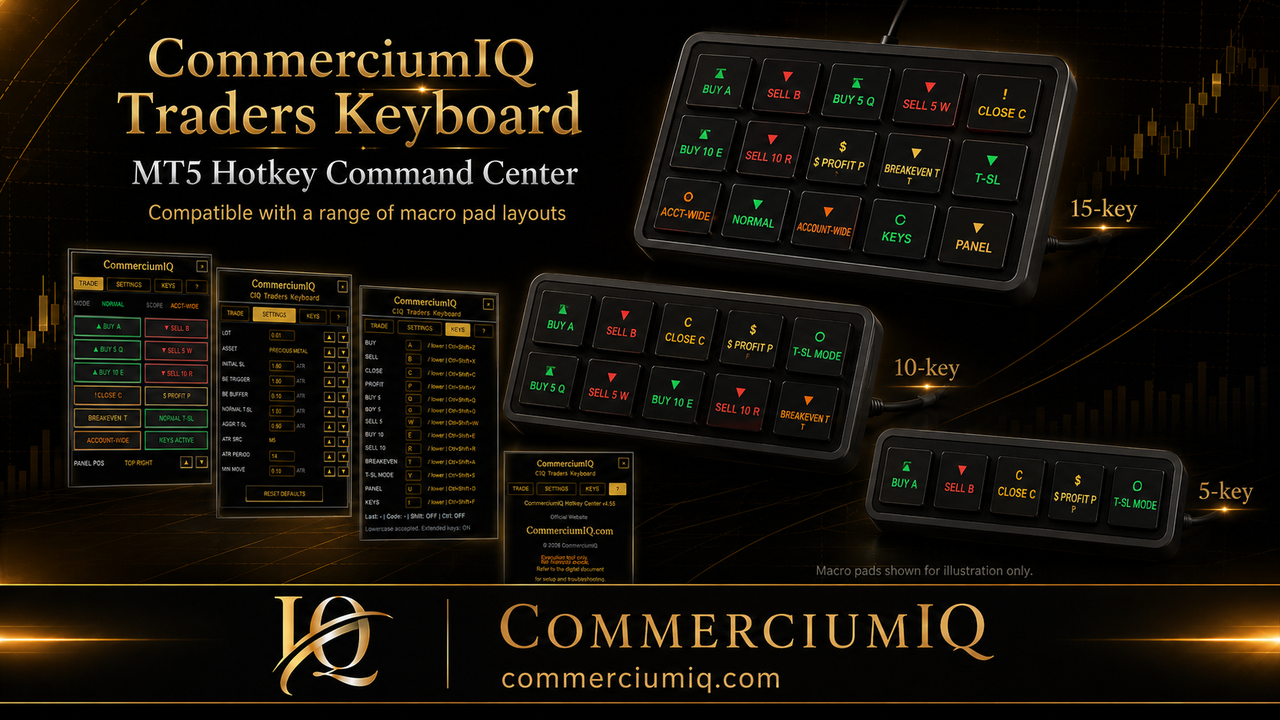
CIQ Traders Keyboard belongs in the manual workflow support category. It should not be described as a script library, Expert Advisor, signal system, or trading robot.
That boundary helps buyers choose the right tool for the right reason.
Think in layers of control
Hotkeys, scripts, and Expert Advisors can be understood as layers of control. A hotkey usually supports a manual action. A script can perform a coded action. An Expert Advisor can monitor or act under rules depending on its design.
The farther a tool moves from direct manual action, the more the user must understand testing, monitoring, and failure modes.
This layered view helps readers choose the correct tool category instead of treating all MT5 tools as interchangeable.
Avoid mixing product categories in marketing
A manual command-center product should not borrow language from automated strategy systems. Words that imply robot trading, signal generation, or hands-free decision-making can attract the wrong buyer.
The better wording is manual workflow support, command organization, supported MT5 Desktop environment, and demo-tested setup.
That language keeps the product honest and helps the comparison article support the overall brand position.
Use testing depth that matches tool autonomy
The amount of testing should match how much autonomy the tool has. A hotkey may need mapping and result testing. A script may need code-behavior testing. An Expert Advisor may need logic, market-condition, and runtime testing.
A user should not test an EA with the same checklist used for a single hotkey command.
The comparison becomes more useful when it explains that testing is not one-size-fits-all.
Buyer fit by technical skill
A non-technical manual trader may prefer a visible workflow layer with clear documentation. A technical trader may prefer scripts because they can inspect or edit the behavior. A trader who wants rule-based automation may research EAs separately.
None of these choices is automatically superior. Each one fits a different skill set and maintenance burden.
The safest choice is the tool category the user can explain and support over time.
Final category boundary
CIQ Traders Keyboard should sit clearly in the manual workflow support category. It is not a script marketplace, not an Expert Advisor, and not a signal service.
That distinction should be repeated because visitors may land on this page from search and never see the homepage first.
A clear boundary makes the page stronger for support and buyer qualification.
Use the comparison as a buyer filter
This comparison should help the reader self-qualify before buying anything. A user who wants visible manual command support should think differently from a user who wants coded automation or a fully rule-driven Expert Advisor.
That buyer-filter purpose is important because the same visitor may search for hotkeys, scripts, robots, and execution tools without knowing the difference.
The page should make the categories clear enough that the wrong-fit buyer slows down before checkout.
Final MT5 tool category check
The final check is simple: if the trader must press the command and remains responsible for the decision, the tool is in the manual workflow-support category. If code performs a defined action, it is closer to a script. If rules can monitor and act over time, it is closer to an Expert Advisor.
That distinction keeps CIQ Traders Keyboard positioned accurately as software-only manual workflow support.